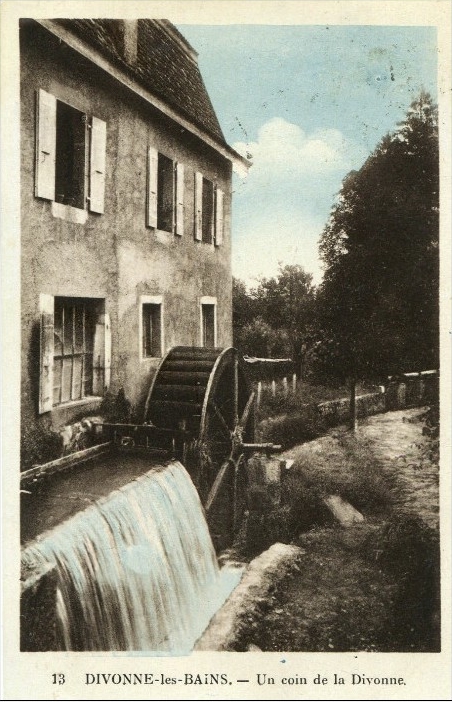
The Moulin David is located in the heart of Divonne, on a leat (water supply channel ) from the river Divonne-Versoix whose source sits at the foot of Mont Mussy and flows into Lake Geneva at Versoix (Canton of Geneva). It was built 50 metres downstream of four perennial springs (Barbilaine, Emma, Vidart and Ausone), on an incline that creates a "head" (vertical drop) of water : an ideal place to turn a water wheel.
The Celts left votive offerings to Divona, the goddess of abundant springs worshipped throughout Gaul.
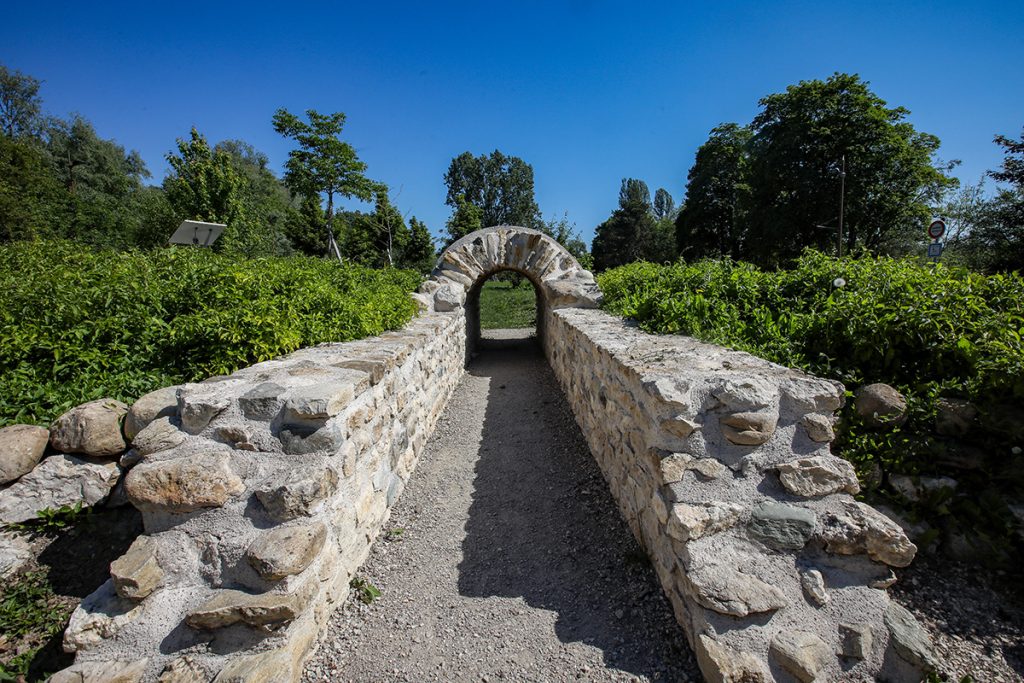
The Romans made use of the spring “Emma” from the 1st century. They fed its water down to Noviodunum (Nyon), the urban centre of the “Colonia Julia Equestris », by means of a 10km long underground aqueduct . A section of the aquaduct can be seen along avenue de l’aqueduc. A reconstruction (see photo) has been built alongside Divonne lake.
« Les forges de Divonne et de Mijoux entre 1353 et 1400 » (Forges in Divonne and Mijoux between 1350 and 1400) by the historian Alain Mélo mentions a feudal mill on the site of the current Moulin David.
In the 19th century fulling mills, rolling mills, sawmills, paper mills, machine workshops (turning and cutting), forges, trip hammer mills and diamond works all operated in Divonne. The mill took its name from the owners, the David family. It had four paddle wheels: three on the right bank of the leat (water supply channel), and another on the left bank, which operated a fulling mill.
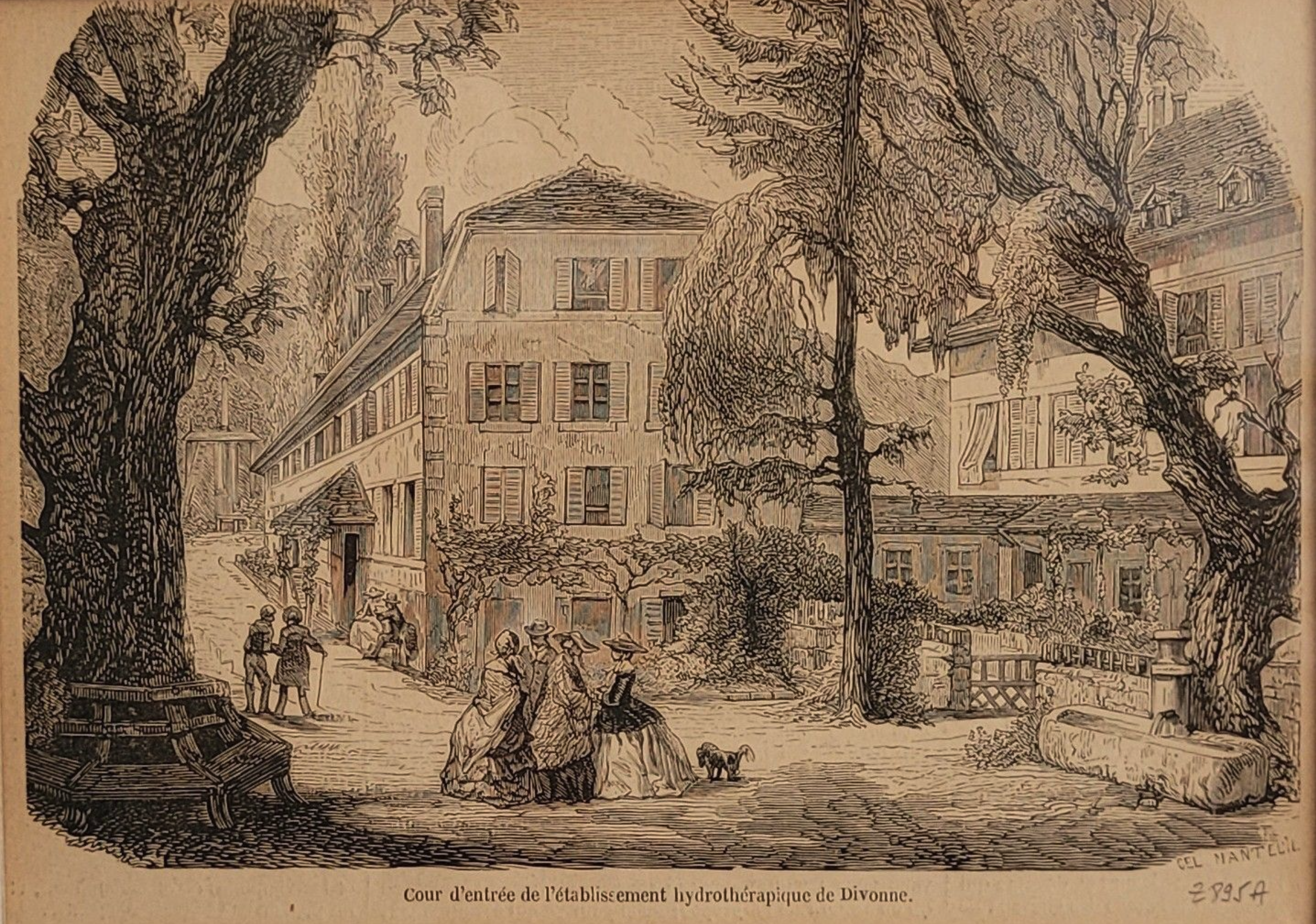
First hydrotherapy establishment founded by Dr Paul Vidart.
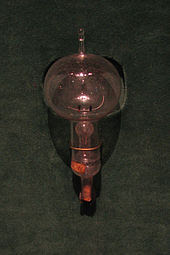
Edison files his patent for an electric light bulb under vacuum with a durable carbonised Japanese bamboo filament.
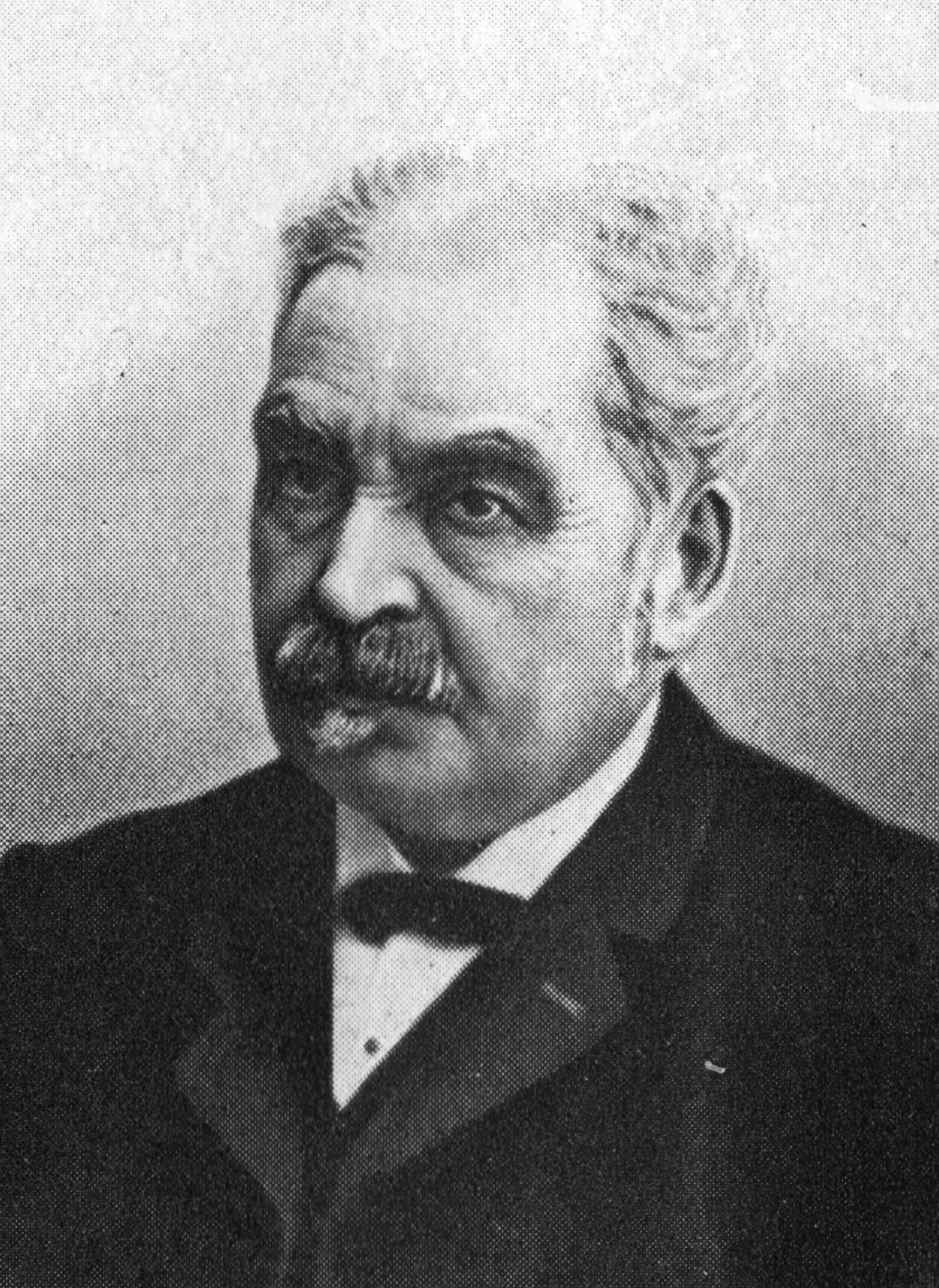
The industrialist Eugene Goudard buys the Moulin David and the plots of land on the left bank, where he builds a diamond works whose grindstones are driven by the mill wheels.
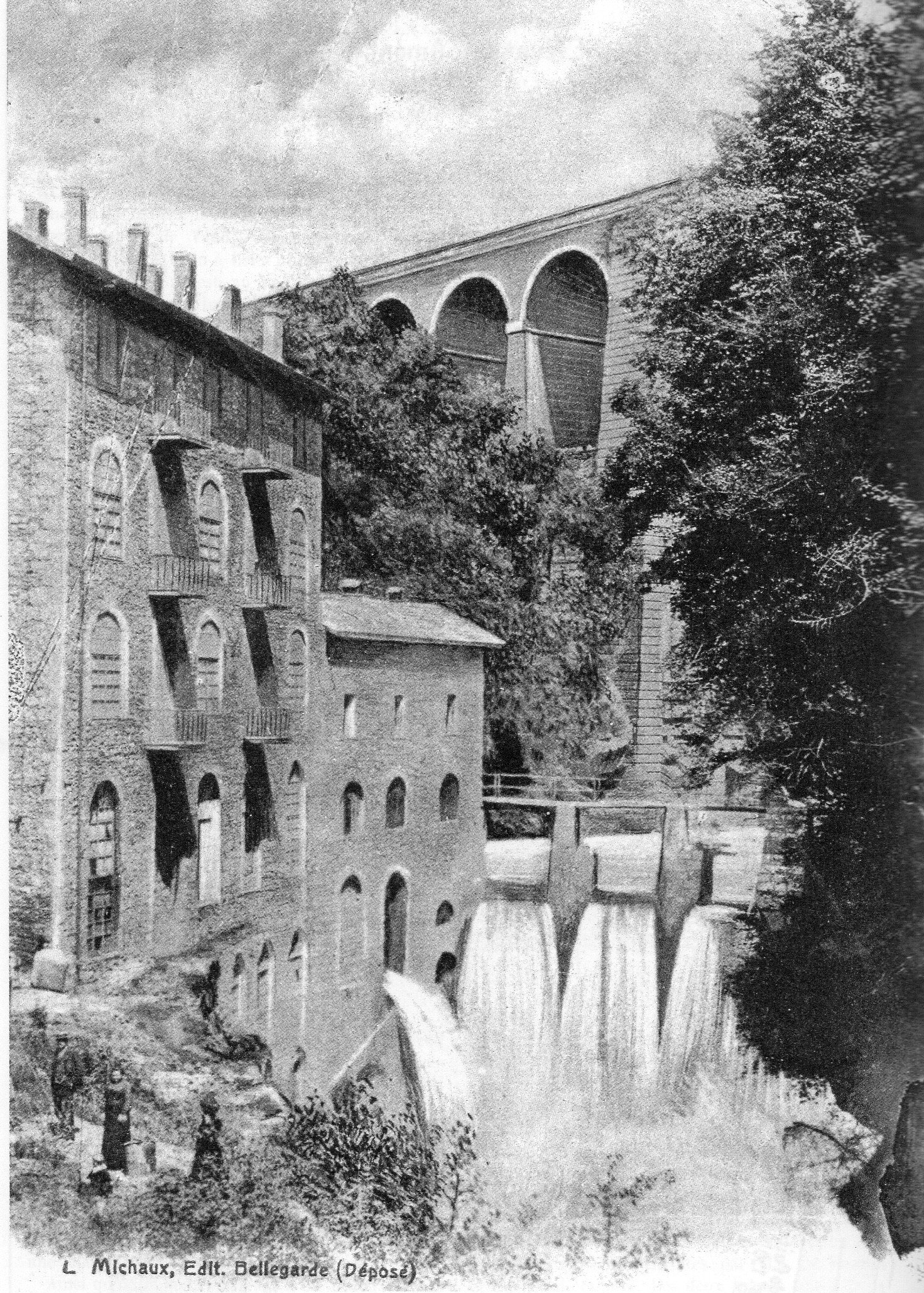
Louis Dumont builds a hydroelectric power plant on the Valserine, making Bellegarde the first town in France to be lit by electric light bulbs.
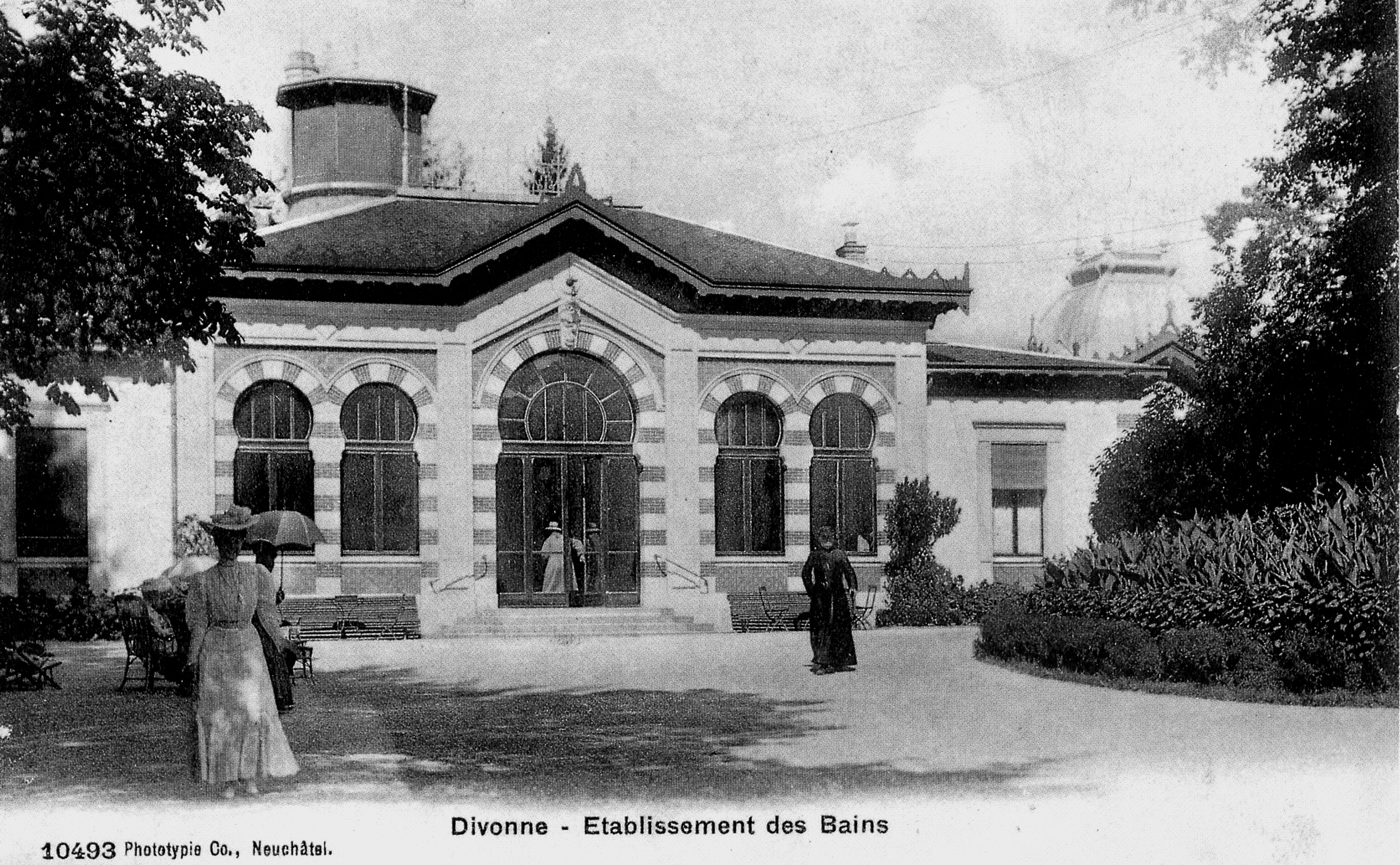
When it first opens, the new hydrotherapy establishment is lit by gas. In 1887, the gas supply pipe becomes defective. Eugène Goudard (who is also a Société des Bains administrator) makes the mill's hydraulic power available to the Société des Bains on a trial basis for one season, in order to operate a dynamo . This enables the hydrotherapy facilities and associated hotels to be lit by 250 electric lamps (each one 18 candela).
On 28 May 1888, the Board of Directors, noting that the installation of electricity throughout the facilities had produced good results, leases the power output of the Moulin David. Henceforth the mill is a hydroelectric power plant producing 110V direct current. That same year, the water wheel is replaced by two turbines installed in a «pool».
The Société des Bains buys the mill and hydroelectric power installation
The town of Divonne builds a hydroelectric power plant at the Pont des iles.
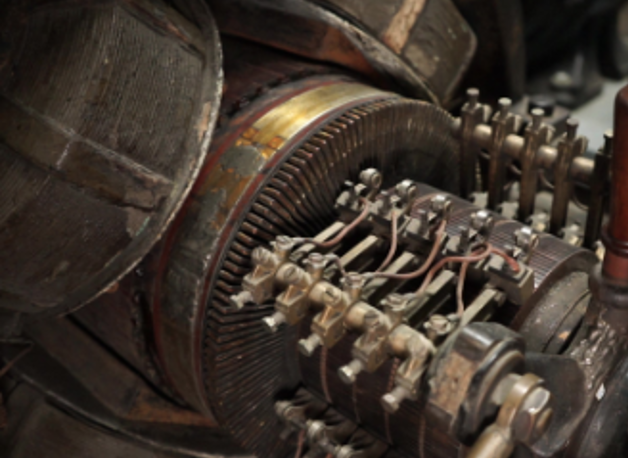
Installation of a motor-generator to convert the 440V direct current supplied by the municipal power plant at Pont des Îles to 110 V direct current.
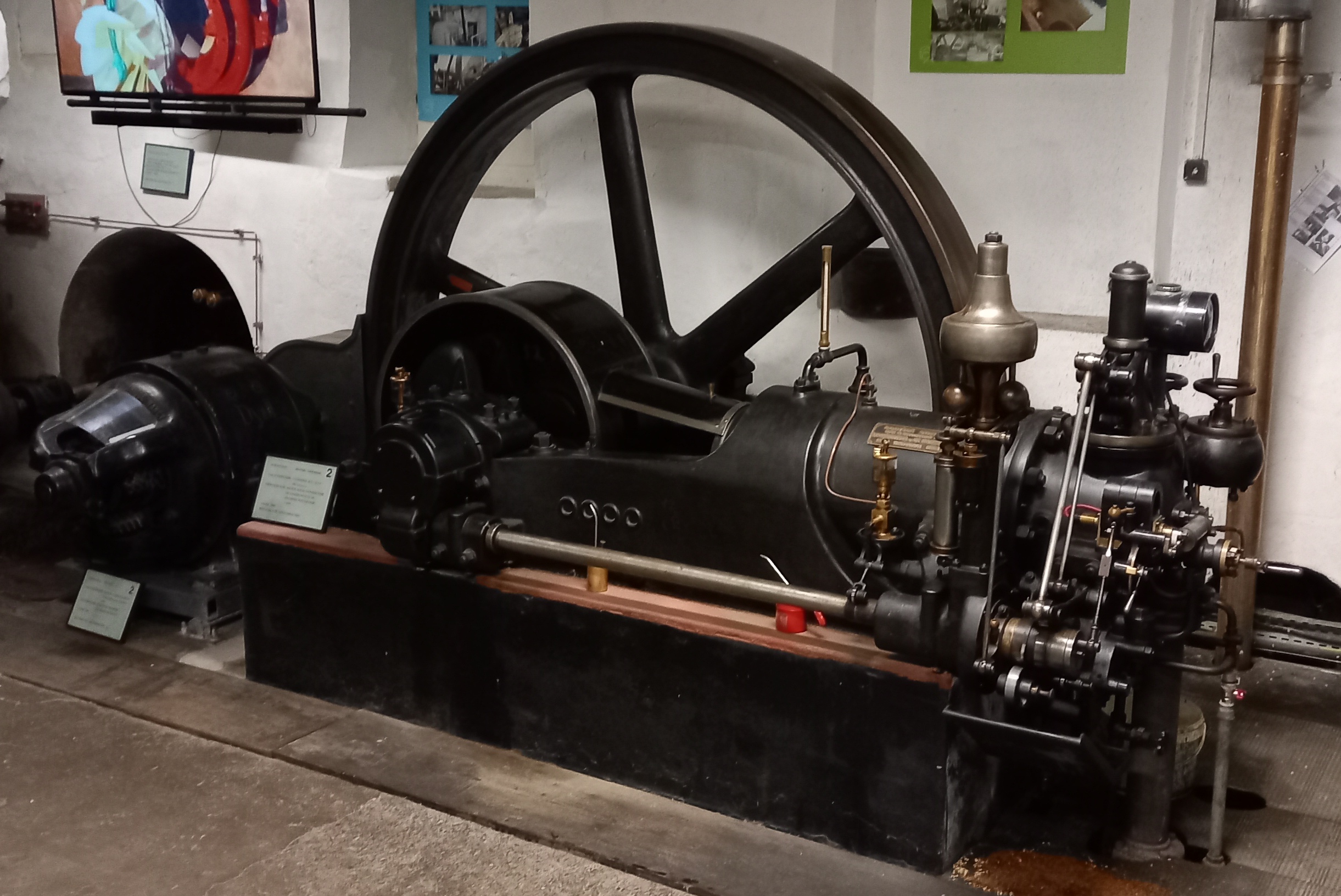
Purchase of the Winterthur backup combustion engine.
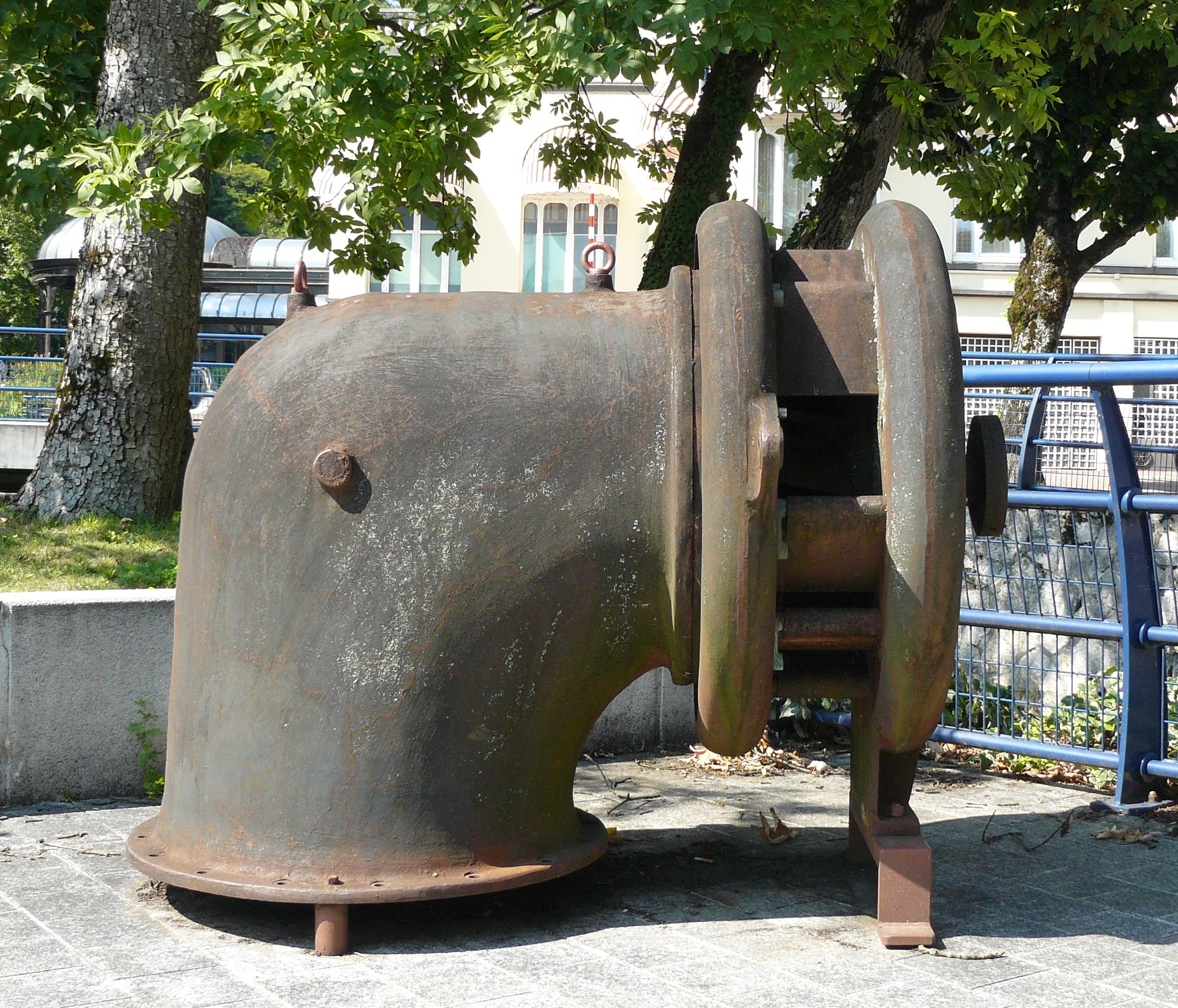
Replacement of the two Fourneyron turbines with two Francis turbines made by Ateliers des Charmilles in Geneva. One of these is still functioning in its original location. The other can be seen in the Place de l’Office de Tourisme.
Arrival of alternating current with the “Forces Motrices de Savoie” which would be nationalised by EDF in 1946. The Moulin David power plant continues to supply the emergency lighting of the casino with 110V direct current until 1992.
Closure of the Moulin David hydroelectric power plant.
The town of Divonne buys the Moulin David and uses it as a storage space. The plan is to eventually demolish everything, including the machines.
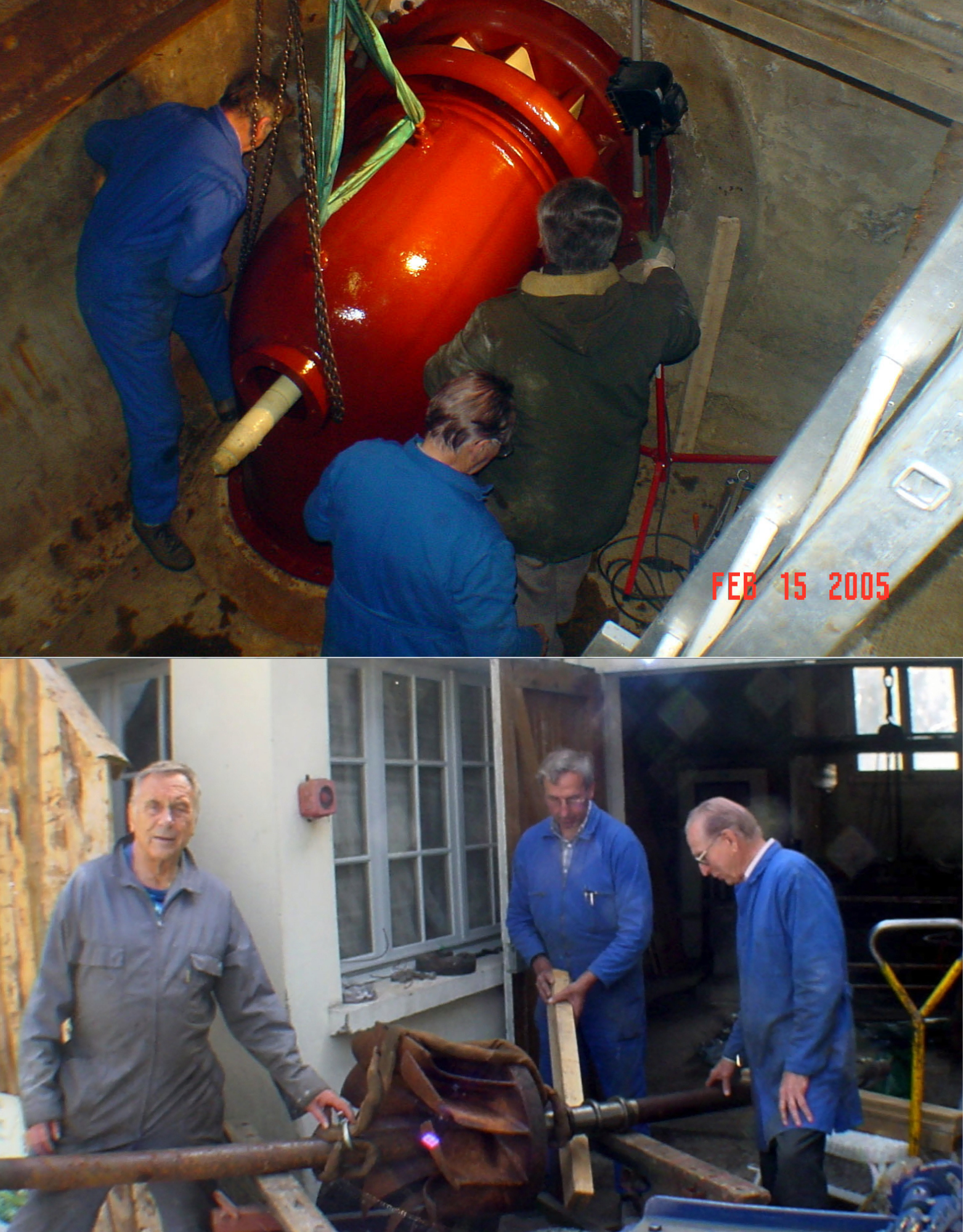
George Leskens, a retired CERN Engineer decides to save the plant and restore the machines to working order. He gathers together retired engineers, technicians, and mechanics from CERN together with Divonne metalworker Gerard Vindret. Other locals from Divonne and the Pays de Gex join them. They are supported by the Divonne town council and the “Services Industriel de Genève”. It will take the volunteers twelve years to restore the machines to working order.
Creation of the Divonnelectro association.
Divonnelectro receives the Rhone-Alpes heritage prize
Educational material and equipment prepared for "introduction to electricity" school visits. The Moulin David is now a living museum in the making.